Rebel Art, Indie Spirit, Outlaw Marketing - Since 2005

June Contest #1 Win an Original Pen and Ink Drawing

We`ve finally arrived at the first contest ever held at this website.
We’re pretty stoked around here about the impending release of Optimum Wound Volume One in early September. It hits the Previews catalog on June 24th.

So we’re celebrating by holding contests all month.
This will be the first of four held in June. Every Friday we`ll be offering up prizes of escalating coolness. This week features a 11″ by 12″ pen and ink drawing. You can win this artwork by following the rules below.

contest 1 starkweather uzis 1 June Contest #1 Win an Original Pen and Ink Drawing

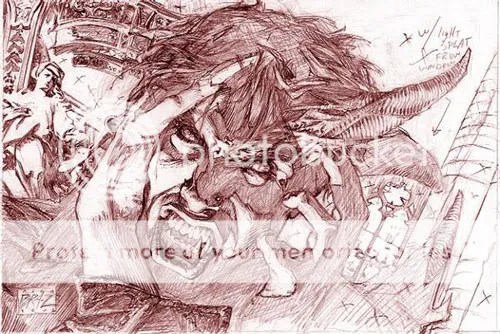
It’s a drawing of my main character Starkweather from Battles Without Living Witnesses. It’s 12 inches tall and 11 inches wide (30cm x 27.5cm), India ink on acid-free paper. AND IT”S YOURS TO WIN.

June 2009 contest 1 rex June Contest #1 Win an Original Pen and Ink Drawing

As an added bonus I’ll throw in a copy of Danijel Zezelj’s Rex in the package.

THE RULES

Just answer this question in the comments section.
What have you accomplished so far in 2009 that you’re most proud of?

1. Just leave a comment on this blog, that’s it.
2. You’re only allowed to post once. I read every comment so I’ll know.
3. Private messages or emails don’t count, it has to be posted on this blog.
4. You have to leave a comment before 11.59pm PST on Monday, June 8th, 2009 to be eligible. I’ll add up the number of comments and use a random number generator to select the winner. Then I’ll contact the winner by email and announce them publicly next Friday, June 12th on the Contest #2 blog.
5. This contest is open to ANYONE in the world. If I have to pay shipping to South Africa or New Zealand, that’s MY problem.

Good luck everyone.
-Jay

Five Reasons to Draw with Pen and Ink on Paper (and sometimes big)

pen nibs featured content Five Reasons to Draw with Pen and Ink on Paper (and sometimes big)

by Jason Thibault

Now that computers and the internet have overtaken the world I sometimes fear that a lot of the traditional things that we take for granted will slowly begin to disappear. It may be an irrational fear as the internet has also brought to light amazing factions of creators in different pockets of the globe.

I’ve been noticing new practices taking hold in the comics, manga and illustration professions. Digital inking, Wacom tablets (yes they are cool) replacing pens, vectors overtaking hand-drawn artwork and a strong reliance on Illustrator and Photoshop. Don’t get me wrong, this is not a knock against utilizing those techniques. I have seen some amazing art created on Macs and PCs. I just don’t want it to get too carried away. I have never personally experimented with digital drawing suites like Manga Studio and I will one day when I get the time. For now I continue to love getting my hands dirty with ink and owning a growing collection of original pages and illustrations.

The main reasons to draw by hand

1. Permanence. If you create your pages with a half-decent ink on acid-free paper your artwork will survive for decades and perhaps centuries. Paper is still the most portable storage format. Digital works are stored on your hard drive, CDRom, DVD or back-up tape. But digital file types and storage mediums change each decade. We backed up files on tape in the 1980′s and part of the 90′s. Then we used zip cartridges. Then DVDRoms and portable hard drives. Meanwhile paper is still paper. My stack of originals is nicely filed away in a flat drawer. I still like to keep photocopies and high resolution digital backups though just in case.

history of tape storage Five Reasons to Draw with Pen and Ink on Paper (and sometimes big)

2. Mastering techniques. I realize it takes years and a lot of artistic skill to render quality digital paintings and drawings but there’s just something more immediate about pen on paper or brush on canvas. Whether it’s spending years figuring out how to perfectly sharpen your pencil or the exact pressure needed when drawing lines with a dipping nib or technical pen. It could involve changing up your ink brand, paper type and size or finally investing in some high quality Windsor & Newton watercolor brushes. I’m sure we’ll arrive at a day where students will sit around a live model and sketch them with their wacoms into a laptop. I just hope that day doesn’t arrive too soon.

3. The monetary value of having an original. I realize most art out there isn’t worth much more than the paper or canvas that it was created on and that’s often not the point when creating it. But what about down the line? What if the creator strikes it big? Having a back catalog of originals could become quite lucrative in that case. The idea of parting with my originals pains me but my grandkids might not have the same issues. And although I know it’s happened, it’s not often that we visit a gallery to view a showing of digital print-outs.

4. Drawing Big. Once again I realize a computer screen can become an infinite canvas if you zoom in and out far enough. But the sheer power of wild brush strokes on a larger sheet of paper still captivates me. I was so used to crafting comic pages on 11″ x 17″ sheets that I thought I may be confined to those dimensions forever. Then I went to a few comic art exhibits. I saw original pages by Dan Clowes and Chris Ware which were much larger. It completely changed my mindset. And seeing that Paul Pope creates comics on pages as large as 19″ x 24″ was a revelation. And in the art world larger sized works often do command higher prices.

5. Having a completely portable skill set. If you can draw you can draw anywhere. If you’re well practiced with pen or pencil you can draw in your studio, at a cafe, park, bus station, prison etc… No need to boot up software or rely on electricity. Back in the 1990′s R. Crumb traded in a box of sketchbooks for a villa in France. You probably won’t be able to trade in your old laptops and digital printouts and get the same deal.

man sketching Five Reasons to Draw with Pen and Ink on Paper (and sometimes big)

A Pen and Ink Love In
I wanted this particular blog post to be more of a celebration of the amazing array of hand-created artwork that’s out there and specifically works that are rendered in pencil, pen and ink. I’m hoping the next generation of art students and bedroom illustrators embrace the techniques of the past as they forge on ahead crafting new styles and merging the practical with the digital.

In this next part I’m going to focus on comic artists but I’ve mixed in a couple of poster artists and illustrators as well. I’ve kept the number down to around a dozen artists but I could have easily put 50 or 60 (or 500 or 600) more up here. Every artist listed below is one that I hold in high regard. Some have influenced me while others I simply stand in awe of to both their talent and dedication to their craft.

Florian Bertmer
Florian Bertmer is an incredible draftsman who’s taken influences such as Pushead but run with it into a darker direction. He’s a German artist who creates art for posters, t-shirts and album covers.

florian bertmer baphomet Five Reasons to Draw with Pen and Ink on Paper (and sometimes big)

Paul Pope
Paul Pope is the perfect melding of European, Japanese and old-school American cartoonists. And he draws big. On his large-sized boards he deftly creates his comic book masterpieces. He’s one of the aforementioned artists that I simply stand in awe of. The good people at First Second books will be releasing his out of print series THB this fall. The Beguiling comic shop in Toronto has a lot of his art for sale.

paul pope batman 100 Five Reasons to Draw with Pen and Ink on Paper (and sometimes big)

Aaron Horkey
There’s no point in trying to ever draw more detailed than Aaron Horkey. His unique artwork adorns record covers, t-shirts and fast to sell-out prints. There’s nobody out there quite like him. His hand-lettering is elegant enough to make dozens of artists want to quit and change professions. His ink illustrations are so intricate that they actually blow the art up in size (rather than the standard procedure of reducing) before printing it. I’m the proud owner of several of his silk-screened prints which is the only affordable way to obtain his art. His originals fetch thousands of dollars when you can manage to find one for sale.

aaron horkey catalyst Five Reasons to Draw with Pen and Ink on Paper (and sometimes big)

aaron horkey detritus line art Five Reasons to Draw with Pen and Ink on Paper (and sometimes big)

aaron horkey diesel show Five Reasons to Draw with Pen and Ink on Paper (and sometimes big)

Jae Lee
I’ve been in love with the art of Jae Lee ever since first buying up all of the issues of Namor that he worked on in the early 90′s. Despite the murky coloring and poor-quality newsprint that Namor was printed on his edgey style cut through. He became a fan favourite while he was very young. He continually refined his style by at first taking a looser approach following after Bill Sienkiewicz, Barron Storrey and Kent Williams. After a hiatus he came back in the early 2000′s sporting a more realistic approach yet still with the jagged edges and razor thin lines that he was always known for. He must have gone through an oil tanker worth of black India ink throughout his career.
In 2006 it was announced that he would be providing art for the Marvel adaptation of Stephen King’s Dark Tower series. He worked strictly in pencils for this project and colorist Richard Isanove darkened his grey tones to black in Photoshop and went to town with them. Check out his originals at the Albert Moy Gallery.

jae lee dark tower gunslinger Five Reasons to Draw with Pen and Ink on Paper (and sometimes big)

jae lee wolverine Five Reasons to Draw with Pen and Ink on Paper (and sometimes big)

Lee Bermejo has risen to the cream of the crop of the comix industry. He came out of the gate around 10 years ago working for Wildstorm where his work looked like it had been created by a seasoned pro despite his young age. You don’t hear much from him on the interwebs. We snagged an interview with him recently but he has no website or much of a presence online. You can however find his gallery over at Splash Page Art. I’m guessing he’s too busy busting out insane amounts of detail on his artwork to bother much with the internet. His graphic novel Joker (written by Brian Azzarello) was and is a bestseller. It hit stores shortly after The Dark Knight was in theatres.
As amazing as he is with pen and ink it’s his recent style that he’s been developing over the last few years that has found him new fans. He creates textures and layers with pencil and then highlights and outlines the shapes with ink.

lee bermejo the stand 4 cover Five Reasons to Draw with Pen and Ink on Paper (and sometimes big)

lee bermejo joker 1 Five Reasons to Draw with Pen and Ink on Paper (and sometimes big)

Brian Hitch made everyone in comics take notice of him and his art when he joined Warren Ellis for the first 12 issues of The Authority. The two of them helped to make famous the more cinematic “widescreen” approach of comics in the late 1990′s. But it was his five-year run with Mark Millar on Marvel’s Ultimates that sent his name soaring into the stratosphere. His masterful combination of exaggerated super-heroic realism pushed front and centre over painstakingly rendered backgrounds has won him hundreds of thousands of admirers. And artist Paul Neary must have the patience of a Buddhist monk to have inked a lot of those pages.
You can find a lot of Hitch and Neary original art over at The Art of Comics. And if you have a spare two or three grand sitting around you could commission an original.

bryan hitch ultimates 2 13 2 Five Reasons to Draw with Pen and Ink on Paper (and sometimes big)

Tim Bradstreet
It’s no secret to anyone who’s followed Optimum Wound for a while that we’re big fans of Tim Bradstreet’s artwork. When I happened upon his book Maximum Black I was immediately inspired to start experimenting with realism and photorealism and I haven’t looked back since. Tim’s style has also evolved over the years and his graphic design skills are razor sharp. He’s brought a movie poster and book jacket sensibility to comic covers and won himself a legion of fans in the process.
Tim Bradstreet’s art is always a source of inspiration around these parts.

tim bradstreet punisher movie tease Five Reasons to Draw with Pen and Ink on Paper (and sometimes big)

tim bradstreet punisher comicbox Five Reasons to Draw with Pen and Ink on Paper (and sometimes big)

Geoff Darrow
I was blown away by the art of Geoff Darrow from the first moment a friend showed me a copy Hard Boiled. I needed to see more. Unfortunately Geoff takes a long time to create his painstakingly detailed artwork. The originals (that I’ve seen listed on eBay) are massive in size. I believe the pencils are done on illustration paper and then the inks are drawn on a vellum overlay. He could have rested on his laurels after working on the production designs for the Matrix trilogy but he cut no corners when working on his most recent series, Shaolin Cowboy.

geoff darrow hard boiled Five Reasons to Draw with Pen and Ink on Paper (and sometimes big)

geoff darrow hard boiled 2 Five Reasons to Draw with Pen and Ink on Paper (and sometimes big)

Sean Phillips
Sean Phillips is one of the most reliable artists current working in comics. Whether he was working on one of my favourite series of the past decade, Sleeper or earning a bigger paycheque on Marvel Zombies I am always inspired by the results. He described the look of his style on Criminal as Kent Williams inking Mike Mignola. He has a nice chunky realistic style and extremely intuitive design skills when it comes to laying out panels on a page. He’s also quite an accomplished painter. You can go to Splash Page Art to see Sean Phillip’s gallery of originals for sale.

sean phillips criminal Iss 10 Pg 25 Five Reasons to Draw with Pen and Ink on Paper (and sometimes big)

Sean Phillips Batman Jekyll and Hyd Five Reasons to Draw with Pen and Ink on Paper (and sometimes big)

Bill Sienkiewicz has always been one of my absolute favourite artists. I treasure my copies of Elektra Assassin. I feel he’s the artist mainly responsible for bringing the look of organized chaos to mainstream comics. Melding the bold illustration styles of the 1980′s with Neal Adams, Ralph Steadman and probably a million other influences Bill knocked us on our asses with his wild drawings and layouts. From his more realistic subject portrayals in his commercial art projects to his “far-out” experiments in series like Stray Toasters he has never let us become bored with him.
It’s his collaborations with Alan Moore on Big Numbers and Brought to Light that really did it for me and showed what could done with the comics medium.

bill sienkiewicz bruce wayne gotham Five Reasons to Draw with Pen and Ink on Paper (and sometimes big)

bill sienkiwicz batman arkham Five Reasons to Draw with Pen and Ink on Paper (and sometimes big)

And finally I’ll leave you with a piece called Lafourcade II by an art collective known as Anville. This is a 16″ x 40″ ink on bristol drawing. The detail is staggering on it.

anville lafourcade ii Five Reasons to Draw with Pen and Ink on Paper (and sometimes big)

And of course need we mention…
Jason Shawn Alexander
jason shawn alexander dead irons 4 Five Reasons to Draw with Pen and Ink on Paper (and sometimes big)

and Danijel Zezelj
danijel zezelj king of nekropolis p Five Reasons to Draw with Pen and Ink on Paper (and sometimes big)

So what compels you to keep drawing?

Photography Credits:

Both photos at the top were used under a Creative Commons License.
The History of Tape Storage, photo by Pargon
Photo of man sketching by sashafatcat


tweet it button Five Reasons to Draw with Pen and Ink on Paper (and sometimes big)

ANATOMY OF A PAGE: A PROCESS BLOG FOR PAGE 22 OF BATTLES

This was an older process blog that I had done in early 2006. It was sitting out there lost in the Myspace archives. I had a lot of fun putting it together so I dusted it off and put it back up.

3252539022 beaaa516b5 o ANATOMY OF A PAGE: A PROCESS BLOG FOR PAGE 22 OF BATTLES

I wanted to discuss the process behind a page that I drew for my online graphic novel.
Things were about to get rather violent in the story and I wanted to create a dramatic page using techniques I either hadn’t explored before or at least hadn’t used in years.
I layed out the basic page in pencils using an HB lead in a STAEDLER MARS 780 mechanical pencil holder. I use those for all of my pencils.

3252539082 35e0e38e8d o ANATOMY OF A PAGE: A PROCESS BLOG FOR PAGE 22 OF BATTLES
You have to constantly sharpen these babies or have a rotation of 2 or 3 lead/holders going at all times. They get dull rather quickly. I don’t fill in the pencils but will sometimes leave x’s where large surfaces needed to be coated in black ink.
3251713697 4d3b52e5e1 o ANATOMY OF A PAGE: A PROCESS BLOG FOR PAGE 22 OF BATTLES
I stick closely to the pencils for inking. I draw in the thinner lines with a Hunts 102 Crowquill nib dipped in KOH-I-NOOR drawing ink. Then I follow that with thicker lines drawn in with a Hunts 108 nib.
I follow that with a piece-of-crap number 2 watercolor brush and go to town on the heavy black areas.

3251714001 abf80d740a o ANATOMY OF A PAGE: A PROCESS BLOG FOR PAGE 22 OF BATTLES
This is where the fun really starts.
I went to Kinkos and made four or five 11×17 photocopies of the inked page.
I hadn’t played with ink spattering for a few years and I didn’t have the balls to try it on the original art page so I went nuts on the photocopies.
1. I took an old toothbrush and filled it with India ink. I let her rip. I had to try it on several of the copies as my first attempts were disastrous.
2. I then took some of the scratchboard tools that I had in my inventory and ferociously cut lines through the SWAT trooper’s arm and torso.
3. From yet another photocopy of the original art I cut out the hand and gun from panel one and scotch-taped it onto panel two in front of the SWAT trooper’s head.
4. Finally I scanned in the results of the scratched, pasted and spattered 11×17 photocopy into our huge 12×17 inch tabloid scanner.

3251713877 cc2b22e41a o ANATOMY OF A PAGE: A PROCESS BLOG FOR PAGE 22 OF BATTLES
Here’s a closer look at the hacking and slashing I did on the ink work with a scratchboard knife.

3251713819 7d1dc19688 o ANATOMY OF A PAGE: A PROCESS BLOG FOR PAGE 22 OF BATTLES
I didn’t like the anatomical head that I had started pencilling in panel 1 so I drew another one on a separate piece of paper and scanned it in.

jason thibault pen and ink anatomy ANATOMY OF A PAGE: A PROCESS BLOG FOR PAGE 22 OF BATTLES

I pasted the scanned-in anatomy drawing page twice on the page. For the upper left corner of panel 2 I “Inverted” the image in Photoshop for the photo-negative effect.


3251713943 989049849b o ANATOMY OF A PAGE: A PROCESS BLOG FOR PAGE 22 OF BATTLES
And for the final stage I added in the sound effects and lettering.
I use a vector program to do this (such as Adobe Illustrator or CorelDRAW) and religiously use Comicraft fonts for dialogue and captions.

3251713785 8f474fa235 o ANATOMY OF A PAGE: A PROCESS BLOG FOR PAGE 22 OF BATTLES
Then I posted it HERE
With my comic Battles, I’ve been keeping it pretty experimental, mixing media, adding digital elements but 90% of it has been hand-drawn using traditional methods. As it progresses into Chapter 3 and beyond I expect that to increase to 95% hand-drawn artwork as those are the pages that I’m happiest with.
It’s been a lot of fun so far.
-Jay

Photorealism technique with pen and ink part 1

By Jason Thibault,

This article was originally posted on Myspace back in 2006. It was sitting lost in their archives not doing anyone any good so I ported it over here to our homepage. This was one of the techniques that I was playing around with a few years ago. I now use a digital camera to take most of my reference these days and miss using my old Nikon FM but I still do everything else by hand.

A Word on Technique,
I’ve gotten a couple of dozen emails asking how we do what we do. Rich has his techniques and I have mine. I utilize at least 3 if not 4 different ways to achieve my end results and I thought I’d shed some light on one of them. This took me 5 years to figure out. I read every interview I could find with the masters, Tim Bradstreet and John Van Fleet. Whatever knowledge I was missing, I emailed artists directly with specific questions and several of them graciously took time out of their day to fill in my gaps.

Photo Reference: I use an old Nikon FM manual camera with 28mm & 50mm lenses to take reference photos. I’ll sometimes use T-Max 400 ASA film for clarity, but more often Ill shoot high-speed black and white film, usually 1600 Fuji or 3200 Ilford Delta. I’m experimenting with digital cameras, but as of yet haven’t used one for the comic.

The Toolbox: I mainly lay down lines with a Hunts 102 crow quill nib, and thicker lines with a 108. I also use a variety of others for different effects and a mechanical pencil for initial work. For mopping in blacks I use an old shitty $3-dollar brush and for finer feathering I’ll employ a much costlier Windsor & Newton Series 7 NUMBER 2. Ink is strictly supplied by Koh-I-Noor. I swear by it.
3252538546 7768e5f394 o Photorealism technique with pen and ink part 1
Pictured above from top to bottom. Windsor and Newton Series 7 Number 2, holder with Hunts 108 nib, holder with wide flat edged calligraphy nib (for panels borders), cheapo number 2 watercolor brush, holder with Hunts 107 nib, Staedtler Mars 780 mechanical pencil.
Paper: 2-ply illustration board, usually Canson acid-free smooth, or if I’m feeling particularly rich I’ll buy Strathmore 500 series boards and have them cut down to 11″ by 17″ sheets.
I take the reference photos and grab the elements I want from them. I consider this my “first stage” and get the outline down tight. Then the madness ensues. Filling in every little shadow and detail. But this is the path that I took.
I grabbed this photo of a demolished hospital in Montreal.
3251713395 c915b56c5a o Photorealism technique with pen and ink part 1
I did the outline, which in this case almost drove me insane (the brick work in the background).
3252538650 382293a52c o Photorealism technique with pen and ink part 1
Then I composited in the SWAT team during the final stage.
3251713203 ffcd9650a4 o Photorealism technique with pen and ink part 1
Theres a dozen different ways to go about it, and this is just one of them. Here are 2 more examples with original photo, first stage outline and final illustration.
3251713351 e795ffb84d o Photorealism technique with pen and ink part 1
3251713621 0d90868234 o Photorealism technique with pen and ink part 1
3252538954 2f82dba530 o Photorealism technique with pen and ink part 1
3252538822 89805b7aba o Photorealism technique with pen and ink part 1
3252538916 ac78a1efa5 o Photorealism technique with pen and ink part 1
3252538878 477b7f6a68 o Photorealism technique with pen and ink part 1

Artist Christopher Gibbs stops by for a chat

Masters of Ink Artist Christopher Gibbs stops by for a chat

By Richard Serrao

I first discovered Christopher Gibbs about a week ago on MySpace when he friended me. After checking his page I was blown away by his talent and perseverance. At first glance he reminded me a lot of Tim Bradstreet and this artist has quite an incredible work ethic despite not working for the majors yet. He’ll get snapped up soon enough by one of the big companies, mark my words.

Chris Gibbs portrait Artist Christopher Gibbs stops by for a chat

First professional work/first piece you sold (piece / year) and maybe a quick story behind it.

Well let me see… my first paid work was doing other kids’ art projects in high school. I would whip out a couple of quick drawings for them and they would buy me lunch. After that I was doing portraits for families and all that. One that was a lot of fun, I had to do jury duty and the bailiff hired me to do a drawing of her and her sister. That was good times!!!! Now I do mostly commission work for collectors and spot illo’s for websites/wiki pages/ or whatever I get asked to do. I am drawing all the time.

Chris Gibbs 3 Artist Christopher Gibbs stops by for a chat

Self-taught or formally educated? (or mixture of both, mentors etc…)

I went to art school for a brief time. I continued on but not in art. I know this sounds odd, but I did not feel like I was getting anything out of it. So I bailed. I just drew all the time and taught myself what I needed to know. Not what I would recommend for all people, but it worked for me.

Tools of the trade: Taking a quick glance over at your pens, brushes etc…what tools have you mainly been using over the last few years?

Let me see…I love my pens. I use all Faber Castell PITT Artist Christopher Gibbs stops by for a chat pens. I love the b size brush tip pen. Brushes, none that I have ever stayed with. I play with them when I go to the art store and just grab whatever feels right at the time but I use pens as much as I can. I got used to drawing on the run, so pens just came along with that.

Favorite brand of ink:

I have been using Higgins black magic forever but as of late I have not been happy with it so I am looking to change, so if anyone has any ideas they can let me know. I don’t know if they changed the formula on it, but it just does not seem to cover like it used to.

Type of paper:

I use all Bristol board. I have no certain brand that I stick with. I also switch between smooth and vellum depending on what I want for the end product. for comic pages I use Blue Line Pro. I bought a bunch of it and I am still working through the stack…hahahahaha.

Chris Gibbs 2 Artist Christopher Gibbs stops by for a chat

Which artists or creators do you return to for a quick boost of inspiration? Who are the masters of ink?

I have one man that I have been worshiping for years and that is Bernie Wrightson in my mind it gets no better then him. I had a chance to talk with him a week ago at a con in Boston, and he lived up to everything. His art is amazing to look at in your hands…..the printed page does not even do it justice…wow did I just gush a bit?

Other then that I like Tim Bradstreet, Alex Ross, and Dave McKean (when I need a skewed point of view).

Chris Gibbs 7 Artist Christopher Gibbs stops by for a chat

Once a client has handed off an illustration job to you, how do you first tackle the job? Could you give a quick overview of your process?

Well most of my clients have been having me work on versions of them using them as the main subject, turned into whatever they are looking for. A lot of folks want to be vampires oddly enough!!! So I get all the nuts and bolts of what they are looking for, and wait for them to send photos or refs of what they are looking for. If this is not the case I will do 1 or 2 quick sketches for them, to see if it what they are looking for.

Most of the time they go with my first idea and I love that. I like the trust between my vision and what they are looking for. From that point, I start to put it down on board. I work fast with the pencil, and if I am inking it I do no shading, I save that for when I go in with the ink. I just lay out the shapes of the shadows. No need to waste the time filling them in. Then I just button it up and send it away.

Chris Gibbs 8 Artist Christopher Gibbs stops by for a chat

What’s currently sitting in your mp3 / CD player / turntable?

mmmmmmmm.music………lets see………I downloaded the new NIN album the other day and I get new tunes all the time. I have a wide range of tastes. I got a bunch of new MC Chris songs. I have also been downloading a lot of odd metal stuff. My all time fav song is the Gentle Art of Making Enemies by Faith No More.

What’s hanging on your walls and what is your favorite piece of art that you own (not created by you)?

I have a picture of Rorschach from the Watchmen Artist Christopher Gibbs stops by for a chat that I bought from Joe Linsner when I was 14 at a New York Comicon.. It has been on my wall ever since. I love it. It is full color and I bought it for $5. It rocks.

Chris Gibbs 9 Artist Christopher Gibbs stops by for a chat

Last novel you read and last movie that you saw (that you’d recommend)?

Novel….lets see…I re-read Diablo Cody’s Candy Girl Artist Christopher Gibbs stops by for a chat the other night, that book is funny and disturbing at the same time. As for movies I am still blown away by The Dark Knight Artist Christopher Gibbs stops by for a chat. Say what you want, but that is what a comic film should be.

Current and upcoming projects?

Current projects…hmmm. Just busting out commission work right now. I have a couple of promo pieces that I am going to be doing soon for a friend’s comic, but other then that I am looking for a steady gig right now. And as always I am pimping my gear. I sell t-shirts and prints of my art.

What would you tell an aspiring artist who is working his ass off but still needs and wants to break through to the next level?

That is a good question, because I am still in the trenches myself. I go to as many cons as I can as a guest and set up. I show my work to everyone that will look. Make friends that do what you want to do. They may not have work for you, but they will always let you know what they are doing and how they are doing it. And just stay with it. The more people that see you the better. Try to build a buzz about what you are doing. That’s what I do. I am selling work all the time to fans, without having a steady gig or a book coming out.

Chris Gibbs 10 Artist Christopher Gibbs stops by for a chat

To read more Masters of Ink interviews check out the last two with Andy Brase and Becky Cloonan.

Switch to our mobile site