An Artist Interview with the Almighty Godmachine
August 13, 2009 by admin
Filed under masters of ink

By Jason Thibault
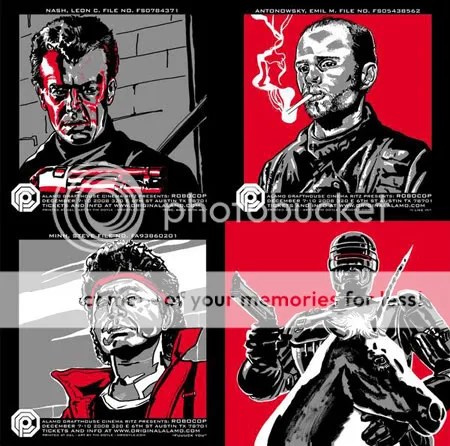
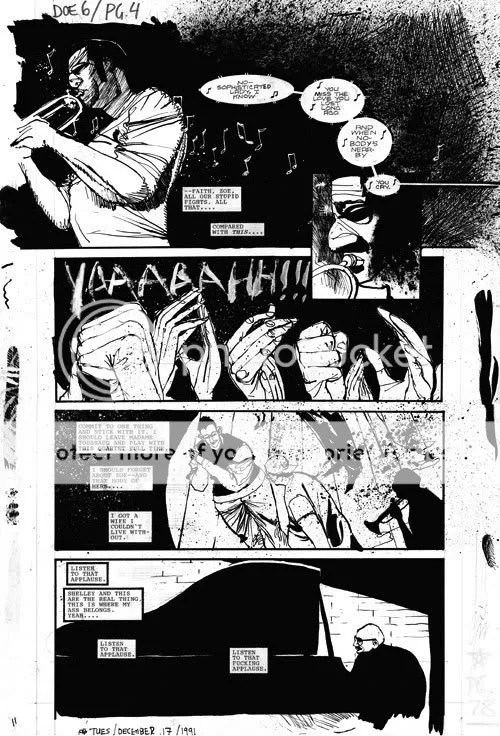
Pure badassery. That’s all that came to mind the instant I saw the art of Godmachine. Like all of my favourite artists from the 60’s to the 90’s rolled into one. His illustrations have a “don’t give a damn attitude” and they look like they’ll bite if you get too close. His art decorates skate decks, posters, album covers, stickers, prints and most notably t-shirts. I’m hooked.

What inspired you to first start drawing? Did you struggle in your formative years or did it come easy to you?
I remember drawing a picture of Mickey Mouse when I was a kid and showing it to my best friend ‘bumpy’ – I remember he thought it was the best thing he had ever seen. I then remember doing a sketch of Jimi Hendrix and my family being a bit shocked that it was so good. I always drew- I was not really encouraged to do so as a kid so it was always there but not as an option to pursue- I was always told I had to build things or fix things- art was never accepted as a career choice. It has only been since I have had the support of my soon to be wife that it has developed into something that can sustain me.

First professional work (piece / year) and maybe a quick story behind it.
first professional piece was a clip art style piece for a shop in the UK. I remember making a slide show and borrowing someone’s laptop to show the owners of the company my dreadful artwork. They liked it- they bought it and sold it. I cringe at the thought of it- but was a great way to start. I can’t even remember what it was- some emo mess I think ahahahha.

Were you self-taught or formally educated? (or mixture of both, mentors etc…)
I am self taught. I remember being told a few things throughout my life and you kind of just pick things up from different places as you go along. I have a few mentors that help me with work now- more so now and I am trying harder to get most of what I lost as I was labouring on worksites. I think being able to look is the most important thing about art. I often ask people if they can draw, without looking, all the lines on the palm of their hand on a piece of paper now. or what the bottom of my jeans look like as the fold onto my shoes. I can- because I spent so much time looking at those things. I see a lot of youngsters copying ideas off people these days but not really knowing why, or what. they add light sources to places where there are none and detail where you don’t need it and wonder what they are doing wrong. they need training. It tickles me that they get confused as to why their pieces aren’t working. Jimi Hendrix used to say that he was copied so much that people even copied his mistakes. Same thing happens in art. And while the artist is correcting his mistakes and progressing- the blind followers are consistently making the same mistake over and over again and getting nowhere. are we off subject now? Maybe.
Tools of the trade: Taking a quick glance over at your pens, brushes etc…what tools have you mainly been using over the last few years?
A Wacom tablet and nothing else. I used to use paper and pen and scan it in and colour in photoshop. Now it’s all Wacom- from sketch to finish. It’s a shame really- I wish I had the time and the space to use the 8 blank canvases I have under my desk. As for Wacoms- you will never, never ever get the response you will get from using a pen on paper. Technology will never replace that feel or the look.

How has your toolbox evolved compared to when you first started out?
As above. Started out using pencil on paper, then paints and now a wacom. I dont like art snobs- people who masturbate over tools ‘oh you simply must use Bristol board’. No. That stuff is an option, Macs are an option, all tools are an option. I have a friend who paints with house paint and make up using his fingers. His work is better than those who buy the best materials. It is nice to use the best you can- but people forget that it won’t help your skills, and without your skills you may as well wipe mud on a wall.
Favorite brand of ink:
Black fine liners you get from the post office or a biro. Biros are better because they are everywhere and mostly free.
Type of paper:
White photocopy paper- you can get 1000’s of sheets for only a couple of quid and it is as good as anything.

Which artists or creators do you return to for a quick boost of inspiration? Who are the masters of ink?
I get my inspiration from a lot of places. But I return to most artists to get, not inspiration, but that feeling of awe. Chet Zar.
Once a client has handed off an illustration job to you, how do you first tackle the job. Could you give us a quick overview of your process?
I make coffee- turn the computer off and panic whilst nervously avoiding the issue. Then I see something in a magazine or the Mrs tells me what I should do and an idea comes to me. Then I will sketch it out on Photoshop- and more recently paper- then make a start. Sketching in Photoshop- new layer- more defined- new layer etc etc.
Back in Black T-Shirt Show from Solid Motive on Vimeo.
What’s currently sitting in your mp3 / CD player / turntable?
I am still listening to Goblin Cock, Big Business, Blade Runner soundtrack and that’s about it really. Recently had my computer fixed and lost all my music- gutted.

What’s hanging on your walls and what is your favorite piece of art that you own (not created by you)?
I was lucky enough to befriend Brian Morris recently and he sent me some awesome pieces- they are these beautiful screen prints of skulls and birds and more skulls. the guy is amazing.
What’s the last novel you read and last movie that you saw that you’d recommend? Which movies and books do you always return to?
Dean Koontz is great. I recommend you reading his stuff. I was brought up (didn’t start reading really until 18/19) on modern classics, On the Road, One Flew Over the Cuckoos’ Nest, Bukowski, Kafka, etc etc, and never really read many modern writers in the ways of horror/thriller fiction. Until Dean Koontz.
As for recent films I saw The Mist recently by the same guys who made Shawshank and Green Mile. Very underrated movie. I recommend you go see it- its the movie equivalent of say a Neurosis track or some other great doom song- mind blowing. I also saw No Country For Old Men, I am still mulling over that one- can’t tell if its the best film in the world or a bit meh…. For that reason alone you know you should watch it huh? hahahah.

Current and upcoming projects?
I want to do an art show in my home town soon. I was never really liked as I was ‘the guy that did skulls ‘n ‘ shit’. But since it has become acceptable and I have some names on my portfolio- people are taking notice and being pretty cool. So wouldn’t mind organising a coming home gig with a few other UK artists that I have had the pleasure of knowing.
What would you tell an aspiring artist who is working his ass off but still needs and wants to break through to the next level?
Nothing you can do apart from that- contact everyone- do some work for free- but not all- do big names for free- people like fame- it makes them take notice sadly. But if you are working your ass off and showing your stuff- it’s only a matter of time till you get your break. In the meantime- create your own buzz/scene. The small music producer in his bedroom can do it- so can the kid with a copy of Photoshop.
You also need to be self critical. I remember thinking ‘yes this design is awesome’ then getting no buyers. It took me a while to learn self evaluations- learning to emotionally distance yourself from the work. I get lots of emails from kids who want to know how I sell designs and they are not selling any and when you see their work it’s not that good and it’s hard to try to explain to them that it’s not amazing and that they should practice a bit more. They spend 3 days on a piece- flood it with detail and feel like they have achieved something when in actual fact they have missed the point. I don’t know, it’s hard and I wish I could help without hurting anyone’s feelings.
For more on Godmachine you can go to his site, his blog and his MySpace page.

Masters of Ink: Dan Park’s Wild and Sublime illustrations
July 17, 2009 by admin
Filed under masters of ink

By Jason Thibault
Dan Park is an illustrator and teacher working out of New York. His wildly colorful and raw illustrations grabbed hold of me upon discovering them. I immediately made note of his website so that I could track him down for an interview. And here we go.
What inspired you to first start drawing? Did you struggle in your formative years or did it come easy to you?
I remember drawing unflattering caricatures of teachers and classmates in order to make my friends laugh. Drawing came pretty naturally to me but the ambition for constant improvement was and is a huge struggle.

First professional work (piece / year) and maybe a quick story behind it.
My first professional work was this past year actually. It drew some portraits of business men and women for a Samsung internal annual. The process was a little boring for me and I had to please a lot of people. In the end I wasn’t too happy about the outcome.

Were you self-taught or formally educated? (or mixture of both, mentors etc…)
At an early age, I would go to the public library and read up on art history and I’d try to figure out what was so good about the famous artists out there. It’s hard to remember a day in my life when I didn’t draw, so I guess I’m always in the process self education to a certain degree. I also went to the School of Visual Arts in NY and learned a lot from the illustration chair Tom Woodruff. That was a great experience. I think I’m still learning and being influenced and inspired by everything I encounter.

Tools of the trade: Taking a quick glance over at your pens, brushes etc…what tools have you mainly been using over the last few years?
I am much more of an oil painter but I was having trouble locking down on a look (as I still am). So I decided to make all my illustrative work digital. I pick different tools in painter and I try to experiment. I usually work with scanned textures to add a less mechanical feel and then I get to work. Its pretty frustrating at times and I think I’m going to go back to either traditional paint or ink scans.

How has your toolbox evolved compared to when you first started out?
I guess I’ve honed in on the digital tools that I like.
Favorite brand of ink:
No real ink.
Type of paper:
When I do traditional, I like Arches 300 cold press sheets.

Which artists or creators do you return to for a quick boost of inspiration? Who are the masters of ink?
I look at everyone from Diego Velasquez to Paul Pope. I think the broader the inspiration, the less stagnant my work will be.

Once a client has handed off an illustration job to you, how do you first tackle the job. Could you give us a quick overview of your process?
I haven’t done that much professional work, but when I do, I usually start with research. I try to get a good understand of the subject so that I can convey what I want without the work getting too obvious or naive. Then I make some composition sketches and start on the final. My sketches tend to be pretty loose so that I can have room to explore in the final piece.
What’s currently sitting in your mp3 / CD player / turntable?
Lots and lots of hip hop, classical, folk country, and… THE MARS VOLTA.

What’s hanging on your walls and what is your favorite piece of art that you own (not created by you)?
Haha, I only have my own work on my walls. Even if I had the money to buy my favorite paintings, I think I’d start to get pissed off at the genius of others. My favorite piece that I don’t own right now is the lithograph of Edward Munch’s “Woman in Three Stages”
What’s the last novel you read and last movie that you saw that you’d recommend? Which movies and books do you always return to?
I love Hermann Hesse’s fairy tales and all of Fyodor Dostoevsky’s novels (The Idiot in particular). Too many movies to talk about. “UP” made me feel all gushy inside.

Current and upcoming projects?
I’ve been taking a break from illustration in order to pursue my painting career. I wouldn’t mind doing illustration work here and there, but when I fully come back to illustration, I hope to have learned something from my paintings that can add that extra layer that I’ve been looking for.

What would you tell an aspiring artist who is working his ass off but still needs and wants to break through to the next level?
I think that it’s important to be honest in what you want to pursue, while understanding that art is ultimately for other people. It’s a tough balancing act, but I believe that making that connection with the viewer should be the goal. I think although an appreciation of self expression is valid, emphasizing its value can be confusing for young artists that are ready with a defensive response to criticism such as “I meant to do that”. I also think that the process is just as important as the result. Even if everyone else loves my work, I don’t care for it if the process was not meaningful to me. And finally, keep working your ass off.
Discover more about Dan at his website, Dan Park Studio

Third Wave of Masters of Ink Interviews coming soon
We’ve got a shitload of new interviews in the pipelines. Six are already prepped and start launching tomorrow. We have a much more diversified line-up of artists this time around and they nicely compliment the interviews that we’ve already posted.
Here’s a sneak preview of the next six artists which will show up here over the next two weeks.
Dan Park – a rad illustrator who has a very punchy style.

Sean Gordon Murphy – a comic book artist who’s worked on Hellblazer and has an upcoming book with Grant Morrison/

Tim Doyle – a rising star on the poster scene and an artist who sets his own terms.

God Machine – pure badassery filtered into human form. The first of a few artists we spoke to who work in the music biz.

Adam Schmidt - another great illustrator with a definitive style that caught my eye right away.

Adam Turman - great pinup artist but he had a few other styles hidden up his sleeve as well. A very versatile craftsman.

We have a half dozen other interviews in various stages of completion but I won’t hint at them until they are in my hands.
Darick Robertson Does a Drive By
March 23, 2009 by admin
Filed under masters of ink

By Richard Serrao
Darick Robertson makes comics fun to read again. I can’t wait to get home a tear open a new Boys collection just to see what kind insanity and depravity that writer Garth Ennis and artist Darick have cooked up. He got a lot of attention for his 5-year run illustrating Warren Ellis’ Transmetropolitan. He became an in-demand ink-slinger who’s loaned his talents to the likes of DC / Wildstorm, Marvel and as well as covering artistic duties on his and Ennis’ creator-owned series The Boys currently published by Dynamite Entertainment.

First professional work (piece / year) and maybe a quick story behind it.
That depends on how you define “Professional”. First paying work? First published work? All of my Space Beaver stuff would qualify under the latter.

Self-taught or formally educated? (or mixture of both, mentors etc…)
Self taught, with a lot of sought after good advice from pros I’d meet.
Tools of the trade: Taking a quick glance over at your pens, brushes etc…what tools have you mainly been using over the last few years?
These days I am using primarily pens and brush pens. Steve (Whiteout) Lieber turned me on to Faber-Castell pens and i primarily use those and Prismacolor premiere pens with the dual end tips.
When I no longer have to meet strict deadlines, I will go back to my Windsor Newton #2 and a bottle of ink, but the pens take out the drying time.

Favorite brand of ink:
Pelican
Type of paper:
Bristol Board, 2 ply.

Which artists or creators do you return to for a quick boost of inspiration? Who are the masters of ink?
These days it’s still my hero Brian Bolland, and now I’m studying Paul Neary’s work over Bryan Hitch.
Once a client has handed off an illustration job to you, how do you first tackle the job. Could you give us a quick overview of your process?
I usually sketch it out in light blue, scan it, turn it to dark grayscale and once I get the go, draw it in ink.

What’s currently sitting in your mp3 / CD player / turntable?
An 850 plus plus 80’s New Wave song list with a ton of the obscure stuff from the UK that I love, like the Bible!, Colourfield and The Beat. I also am digging Rilo Kiley, Keane and Snow Patrol right now.
What’s hanging on your walls and what is your favorite piece of art that you own (not created by you)?
A toss up between an original Gerald Scarfe Pink Floyd the Wall production cell or my original Bolland cover from Action Comics #571, or my original Flash by golden age creator Harry Lampert.

Last novel you read and last movie that you saw (that you’d recommend)?
Cormac McCarthy’s The Road (Still reading, but its great) and The Day of the Locust
from 1874. You’ll see images that probably influenced Alan Parker when he did Pink Floyd’s The Wall.
Current and upcoming projects?
The Boys, The Authority with Keith Giffen and Prototype.

What would you tell an aspiring artist who is working his ass off but still needs and wants to break through to the next level?
The business is tougher than ever to break into, so focus on creating work you believe in rather than work you think will sell. Marketing is all about being original and productive. Don’t ever start drawing because you want money from it or you’ll chase that dream like a man after his hat in the wind.
To see more of Darick Robertson go to his Myspace page, website or check out his original art for sale at his ebay store.

Ho Che Anderson tells it like it is
February 9, 2009 by admin
Filed under masters of ink

by Jason Thibault
I first read the work of Ho Che Anderson back in the 1990’s when I ran across the first volume of his King trilogy in an indie bookshop in Montreal. Soon after I bought I Want to be Your Dog (from Eros) at my local comic shop and became a lifelong fan. Many years went by before I ran across Ho again. This time it was Danijel Zezelj who hooked me up with him by email. We got Ho to write a blurb for the back cover of Rex.
When passing through Toronto last summer I couldn’t resist looking him up and finally meeting the man in person. We shared a couple of beers downtown and engaged in a 2-hour conversation. I followed up by email (which is how I conducted this interview). The portrait below is the only photo thus far in the Masters of Ink series that I’ve taken personally. What follows below is 4000 words that are equal parts inspiring and heartbreaking. I want to read me some Godhead.

First professional work (piece / year) and maybe a quick story behind it.
That’s a bit of a tricky story. The first comics work I got paid for was a Grendel story I did in 89. For reasons I no longer remember the company, Comico, immediately shelved the project. Then later that year they hired me for another Grendel story, this one written by Steve Seagle. This would have been summer ‘90 I drew it, came out by the end of the year. So that was the first time I ever saw my work in print. I was 20, I’d been trying to break into the biz since I was like, 16. Who knew that job would be the start of nineteen years of pain and torture? And it wasn’t until ‘98 I think that that first Grendel story I did finally saw the light of day. By that time Comico had folded, Dark Horse was now publishing Grendel, and the internet was only beginning to slowly take over every aspect of our lives. A quick story about it? I cried like a total pussy as I drew that second Grendel comic because my girlfriend of all of two months dropped me like a wet rag half way through. You can still see the tear stains on the pages.

Self-taught or formally educated? (or mixture of both, mentors etc…)
Almost entirely self-taught. I did take a few extra-curricular art courses when I was a kid, and of course art was always part of school growing up, but I didn’t go to art college or anything (to my chagrin), I just drew and drew and drew, my entire life. The most valuable art training I had was in grade nine when I learned about perspective. The only valuable things I learned in all of high school were typing and perspective. My art teacher was a perspective master who took great pains to make sure his students had a solid grasp of the discipline which I have benefited from greatly ever since, so thank you Mr. Andre Sepa wherever you are, I’ve always wished I could thank you, not only for allowing me to get away with ruining many a class with my antics but also for being so strict about getting the work done. I can always spot in people’s stuff when they’re winging their perspective, when they don’t really understand the fundamentals, it’s glaring and I’m glad I managed to avoid that particular pitfall. On the other hand I’ve fallen into a million other pitfalls so maybe I shouldn’t get too smug.

I’ve had a couple mentors in the biz. I’ve always considered Matt Wagner to be a bit of a mentor, in that he gave me my first work in the field and offered me some good advice about the craft and the business at a time when I really needed it. The other one is a guy who’s sadly no longer with us, Lou Stathis, ex of Heavy Metal and High Times and Vertigo, who also took me under his wing when I was starting out by hiring me—and firing me—for a project around 1990. Lou was a crusty motherfucker, and I was a snotty know-it-all of a kid without the skills to back his shit up, and Lou busted my ass on many an occasion and I hated him for it, but it wasn’t long before I grew to love that guy. Ah, I loved him from the start, he was a real character. The funny thing is, no doubt if he were alive to read this he’d think I was totally full of shit. So it goes.
Tools of the trade: Taking a quick glance over at your pens, brushes etc…what tools have you mainly been using over the last few years?
Finally, someone unashamed to ask about this kind of thing. I love geeking out on this shit, and reading about other artists toolkits, but for some reason most people think no one wants to read about this stuff. Utter madness. Anyway, I use pretty much the same tools now that I started out with and they’re all the basics. I’ve used everything at one point or another and it’s always fun to make a line on a page, no matter what you use. The ax I use the most is a Hunt 107 pen nib in a brown holder. I also use an assortment of watercolor brushes, usually 4, 5, 6, in that range, though I’ve got a bunch of larger brushes for filling in those big areas of black. I buy cheap brushes, 4, 5 bucks, I use ‘em ‘til they’re frayed, and for some reason I almost never throw them away which means I have tonnes of ‘em. I often use flat brushes for painting, the kind that are cut on an angle, I don’t know what they’re called. I almost never use those hard, coarse oil painting brushes, not even for oils. I find watercolor brushes work in oil just as well as they do in watercolor or acrylic or whatever. I also use markers or drawing pens when I draw ruled lines. I have a full set of ellipse templates that I used to use all the time in the 80s and 90s for drawing word balloons and machinery or whatever. I’d get in there with my rapidograph—another forgotten technology—and use every excuse I could come up with to draw an ellipse.

For some reason those shits were a lot of fun. I still get a kick out of using them but the opportunities aren’t there like they used to be. For penciling, I use anything from an HB for sketching, to a 6H when I’m penciling something on really rough paper. The most comfortable for penciling tends to be 2H to 4H, but it depends on the brand, and since I’m not much of a brand loyalist in most areas they change all the time. For painting I tend to use acrylics, usually Liquitex, but I also like to paint with oils, and sometimes, occasionally, with gouache. Sometimes I mess around with scratchboard when I’m feeling adventurous, but I’m years away from developing a credible scratchboard technique. And let’s not forget Photoshop, Illustrator, and InDesign; no toolkit is complete these days without some familiarity with the computer. Lately I’ve also added photo-reference to my list of tricks. For years I just made stuff up but at a certain point I realized almost all the great artists I admired had clearly done their homework before they started drawing.
I love abstract art, but no matter how abstract I take my stuff I still want it to be essentially figurative based, and more and more I want it to be informed by the details of reality. There are subtleties you can get from life that you just don’t get when you pull something entirely from your mind. Understand, I’m not saying one is necessarily better than the other. Obviously there are things you can pull from your mind that you’ll never find in the real world. But I’ve tried one and for the time being I want to focus on the other.
Favorite brand of ink:
Hands down, Dr. P. H. Martin’s Black Star. The matte version. Absolutely the best ink on the market. If there’s anything better I’d like to know about it. It’s thick and generally easy to spread, though you do tend to have to add water from time to time as it thickens up kinda quick. And black as night. I don’t buy anything else unless I’m in a pinch and there isn’t anything else available. Easiest question on the list.

Type of paper:
Depends. I’ll use whatever’s handy, and I’ve drawn on everything from typing paper to Arches 300 lb cold press. For the last couple years I’ve bought a lot of Strathmore watercolor paper, 140 lb cold press. In case someone reading doesn’t know, the weight determines the thickness; the heavier the weight, the thicker the paper, and cold press paper is the rougher paper which I use because I like a bit of tooth in my paper, I like the resistance rougher paper offers my drawing pen. Hot pressed paper is smooth which some cartoonists like because they can do a lot of line work a lot easier. I like hot press too but if I get to choose I always go for cold press. I also buy Cotman’s watercolor paper and occasionally even good ol’ fashioned Bristol board. For painting I like to use illustration board, usually Peterboro No. 79, or masonite, I love painting on that shit, makes me feel like Frank Frazetta or something. I like heavier drawing paper because, even though it’s more expensive, sometimes painfully so, it feels more luxurious to draw on, and I’m also thinking of the thing’s resale value. A nicer paper is more appealing to a buyer. And it lasts longer. It can be heartbreaking to look at one of your old drawings and see the paper yellowing and getting brittle. Still, everything dies eventually.

Which artists or creators do you return to for a quick boost of inspiration? Who are the masters of ink?
So damn many. I could fill a page with my faves. My favorite artists were always the ones who could switch back and forth between black and white and full color, which is one of a thousand reasons why Bill Sienkiewicz used to routinely blow my mind back in the 80s and 90s. If we’re talking the masters of ink specifically… Howard Chaykin is a big one for me. There have always been better artists, but no cartoonist’s work ever moved me more than Chaykin’s when I was coming up. I’d been aware of him since his Star Wars adaptation back in the 70s but I didn’t get turned on to his stuff in a big way until ’86 when The Shadow came out, and from then until ’89 or ’90 this guy turned out a series of books that got me more excited than anything else that was going on at the time. I have to reluctantly admit his stuff isn’t quite as strong these days as it was back in his heyday but for the inspiration he provided during my formative years and for the thrills I still get when I flip through that stuff I’ll always be the world’s biggest Chaykin fan. Chaykin, Frank Miller, Bill Sienkiewicz, Los Bros Hernandez; those guys were my holy trinity (yes, I know there’re five of ‘em) of comics, not just from a drawing standpoint but also a writing standpoint because I’ve always been in love with writer/artists, and even Sienkiewicz practiced that dual role with Stray Toasters. You could even add Kyle Baker to that rarefied list. I’m talking, again, about the 80s and 90s.
I’m kinda old skool in a way. Miller was blowing my mind even before Chaykin when I discovered him through Ronin. That book impressed me immensely, the way Miller shifted his inking technique with each new chapter, the way he demolished narrative rules and created brand new ones in his quest to push the medium to another level. Other ink artists I admire are, in no particular order, Jason Lutes, particularly the magnificent Berlin, easily one of the greatest comics I’ve ever read; Douglas Fraser, a fantastic commercial illustrator who occasionally slums it by doing some comics; Charles Burns—read the collected Black Hole not long ago and it killed; F. Solano Lopez; Eddie Campbell, whom I’m including because I just read From Hell and was blown away by it; Dave McKean; Herge; David Mazzucchelli; the master Alex Toth; the sublime Milton Caniff; Alberto Breccia; Danijel Zezelj; Denis Bajram, whom I’ve just discovered through the excellent Universal War One; Jose Munoz; Richard Corben, who absolutely will not be stopped; Mike Grell; Adam Hughes; Lynd Ward; Joe Sacco—and I think I’m just gonna end it there. I could easily list a hundred more names. There are a lot of artists I love dearly.
Once a client has handed off an illustration job to you, how do you first tackle the job? Could you provide us with a quick overview of your process?
First off, I read the material. Which may seem obvious, but I’ve been surprised a bunch of times to find out that some artists just wing it. And get away with it. Then I sit down with my sketchbook and do a series of quick sketches, I’m talking about thumbnails. I might do ten or so, as many as it takes to get a range of directions I might go. More often than not one or two will emerge as the strongest. Once I’ve got five or six solid ideas I usually do slightly tighter, larger sketches, then I scan them and send them to the art director. We’ll discuss the sketches and settle on one to turn into a finished piece. Sometimes they’ll want to see a color comp but mostly they’ll let me just go ahead and do it. But every job’s different. Some clients tell me to just do whatever I want and if they like it they’ll buy it, and they always buy it. Other clients they want to see every fucking stage and they’ve got notes on everything. And then when it’s done they’ve got even more notes and you have to go back and make changes and you hand it in and they’ve still got notes. An artist buddy of mine’s got an entirely different process. He’ll get a job and do four or five finished pieces and show them to the AD, who then chooses the best one. I’m always thinking, what if they hate them all? And what do you do with the ones they don’t choose? That just sounds like too much work to me, but to him the way I do it is crazy. I guess we’re all different.

What’s currently sitting in your mp3 / CD player / turntable?
The last two records I bought were Kanye West’s The College Dropout and Metric’s Live It Out. Oh yeah, and the soundtrack to Once Upon a Time in the West, and a Curtis Mayfield greatest hits package. It’s funny, when I was a kid up until my 20s I was a music fanatic, I always knew what was current, I read about music, I followed it quite passionately, then at a certain point I started losing interest in keeping up to date with everything going on, it just started feeling like too much work and I’m lazy by nature. I still love music and listen to it all the time but its rare I buy new stuff and I only download occasionally.

What’s hanging on your walls and what is your favorite piece of art that you own (not created by you)?
My favorite? Easy: my cherished poster for Apocalypse Now, painted by Jedi Master Bob Peak. Love that motherfucker. It hangs above my drawing board and I study it daily. Another favorite is the cover to the soundtrack to Raiders of the Lost Ark painted by the great Richard Amsel. I’m very inspired by movie art be it production art, say by someone like one my great idols Ralph McQuarrie, or poster art by someone like Drew Struzan. I don’t have a lot hanging on my walls. I don’t have a studio exactly, but I have an area of my apartment that functions as such and the walls in that section are filled with images: some 1930s propaganda posters I bought in Spain, an old Mr. X poster, a couple Adam Hughes posters, some of my shit, a Bill Sienkiewicz Superman portfolio cover, a Che Guevara postcard, another postcard featuring a chick with a big ass afro, some photos of girls, etc, etc, etc. A bunch of stuff. I keep them there because they inspire me. In my living room I’ve got a French jazz poster and the one sheet for the Chinatown sequel The Two Jakes painted by a guy named Rodriguez that I would love to know more about because he’s an amazing artist. I’d love to get that thing framed one day. Other than that my walls are pretty blank. When I was younger my walls were covered in images but these days for whatever reason I don’t do that so much anymore.

Last novel you read and last movie that you saw (that you’d recommend)?
The last movie I saw was The Day The Earth Stood Still, which I totally dug. I liked the way they updated the material and for once Keanu’s wooden acting style really suited the story and the character. The last novel I read was a graphic novel, Alan Moore’s and Eddie Campbell’s
From Hell. Fucking Brilliant.
Current and upcoming projects?
I just finished a new book called Sand & Fury, which will be published next year by Fantagraphics Books. It’s 136 pages, black, white and red. I did a comic called Scream Queen a few years ago which I think sold three whole copies, a short horror story about a banshee, a woman who screams under the windows of people who are about to die. This new book expands the original story by adding some background on the protagonist, and taking her on a grisly new adventure. If we can move five copies with this one I’ll feel like I’ve done my job.
Right now I’m working on a couple new things. One is a short film called The Salesman that I’ve written and will be directing. It’s a story about a gun salesman who sells a gun to the wrong guy. I’ve been a frustrated filmmaker for, what, 20 years?, so I thought it was time I finally got off my ass, stop talking about doing it and just fucking do it. Me and my partner are forming a small company and we’re hoping to start rolling by the middle of March.
And then there’s Godhead….
I mentioned Denis Bajram earlier; let me tell you how jealous I am of this guy for getting to do Universal War One, first in France, and now in America through Marvel. He’s doing exactly what I want to do, a big sprawling full color science-fiction epic. The difference is he’s clearly doing something right whereas I’m clearly doing something wrong. I first dreamed up this project in 2001; I started pitching it in 2002. I thought for sure I’d have the thing set up by 2003. I am writing this four days before the start of 2009—2009!—and I’m still trying to get it set up. The story’s about a corporation that creates a machine that allows the user to talk to god, and the Vatican-sanctioned commandos who are contracted to destroy it. It’s got robots and badasses with big guns. I’m dying to do this thing, it would be the first of three stories, just because everyone’s gotta have their trilogy. I’ve come very close to setting it up several times but I’ve never quite been able to close the deal. Right now I’m talking to a couple of publishers about doing it—I was hoping to get the word by now but unfortunately nothing ever moves swiftly as it pertains to my career.

Hopefully by the end of January I’ll know one way or the other. Regardless of what I hear from these people I’ve recently decided to just do the book, effective immediately. It’s already written, I just need to sit down and turn out the pages, which isn’t going to be an easy task because I’m painting the thing and it’s going to be 300 pages long. And since I’ll probably be doing it without the support of a publisher and thus won’t be making any money off it until it’s done, if then, it’ll probably take me a good five to ten years to complete, as opposed to the two it would take if the money were coming in. Which makes me a total mental case to even attempt something like this. But I’ll be certifiable if I don’t do it and get it out of my system so I better just do it and get it over with. And this’ll no doubt be my last comic. I’ve been in the field for a long, long time and the truth is I haven’t really managed to develop much of a fan or client base.
When I was starting out I knew—I mean I fucking knew I was going to have a successful career, and for the first few years everything went exactly according to plan. I had money and more importantly I had opportunities. But somewhere along the way I must have made a wrong turn because things haven’t gone the way I thought they were going to. My pitches always get rejected and there’s basically zero demand for my stuff—witness the amount of time I’ve been trying to get Godhead out there—so there’s no point in continuing past this project. Sorry to be a downer. And never say never of course, but just the same, I’m pretty sure after this one, that’s it. I don’t know, maybe I’ll be like Mario Puzo. I’m pretty sure it wasn’t until he was in his forties before he became successful, when he wrote The Godfather. I could be wrong about that but I know it didn’t come easy for him. I was always a bit of a late bloomer.
I also have to get out there and hustle up some paying work. I had a great year in 2008 and made enough money from my commercial work that I could do my own thing for a while and not have to look for a paying gig. But that cash is rapidly coming to an end so I needs to get myself a J-O-B. No doubt about it, 2009’s gonna be a grueling year.
What would you tell an aspiring artist who is working his ass off but still needs and wants to break through to the next level?
Well, in many ways I’m still an aspiring artist trying to break through to the next level so I’m not sure what advice I could give anyone that would be worth the taking. The best advice I could possibly offer is…GIVE UP NOW! Don’t become an artist, especially not a comic book artist! Put down your pen and find something responsible to do with your life. It’s next to impossible to make a living and more than likely you’ll have to accept rejection as your constant companion. Become a lawyer or a doctor or an accountant or something but do not, I repeat DO NOT become an artist! I wish someone had given me that advice when I was starting out because I’d be a happier guy now. But—if you’re determined to do it—just keep working and trying to get better. If it’s commercial success you crave, study what sells and try to emulate it. If it’s your unique artistic vision that motivates you just keep doing what you’re doing. If you’re serious you’re going to anyway, regardless of what me or anyone else has to say, negative or positive. And that’s really all I can say.
Short film featuring art by Ho Che Anderson
Buy Ho Che Anderson’s graphic novels at Fantagraphics or Amazon.
Check out his original art on sale at The Beguiling.